
Vegetable Patterns
The Weekly Rhythm of Vegetables and What the Plate Reveals
Eleanor Whitfield
·
·
8 min read
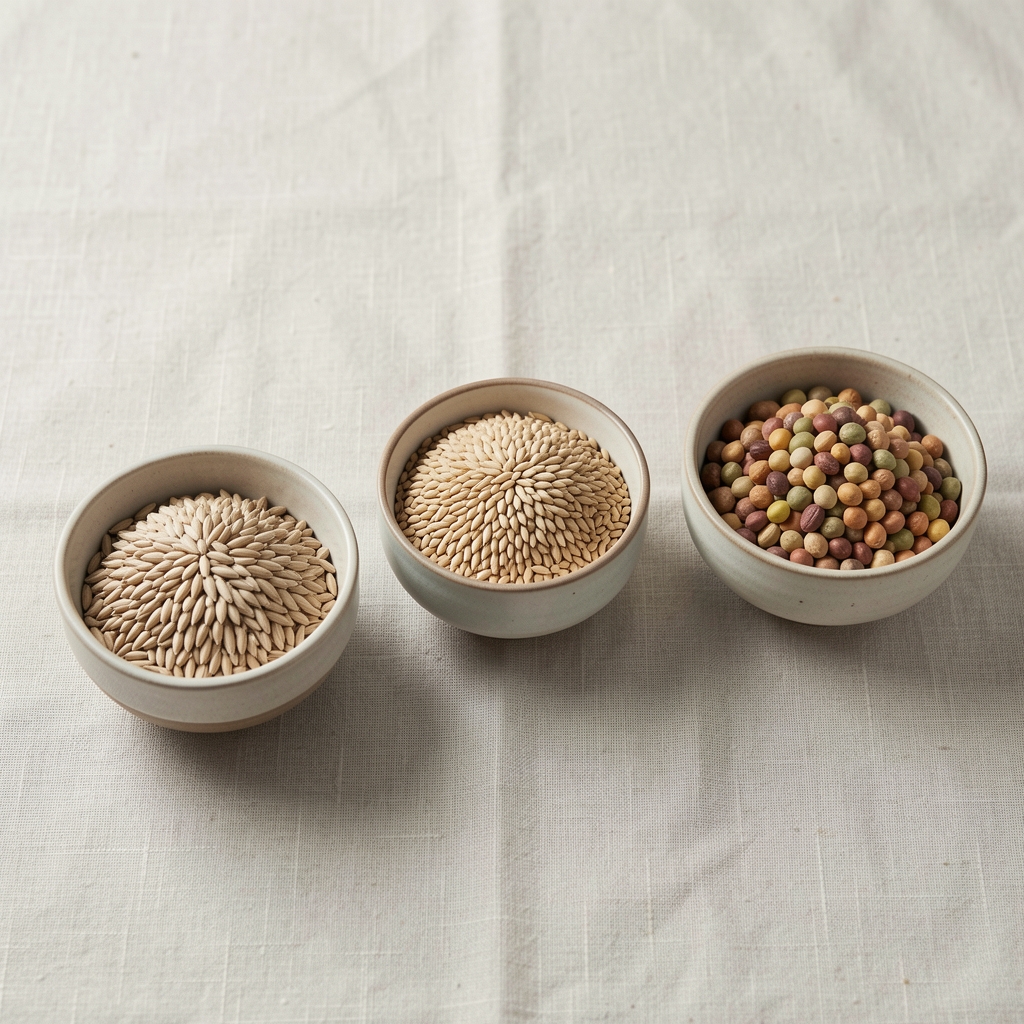
The concept of the portion has acquired, in contemporary nutritional discourse, an almost entirely quantitative character. Portions are measured in grams, in calories, in fractions of recommended daily intake. The plate becomes a set of numbers, and the act of eating becomes an exercise in arithmetic. This framing is not without utility, but it omits something that anyone who has eaten a satisfying meal and an unsatisfying one in the same week already understands intuitively: the experience of a portion is not the same as its measurement.
This article examines portion awareness not as a caloric calculation but as a structured form of attention applied to the act of eating. It draws on food journalling records from a twelve-week observation period conducted by three London households, none of whom were asked to count calories or weigh food. They were asked only to describe what they ate, when they ate it, and whether they felt satisfied at the end of the meal.
Across the twelve-week observation period, the most consistent finding was not related to the quantity of food consumed but to the timing of meals within the day. Households that maintained two or three clearly defined eating periods — with meaningful intervals between them — reported a substantially higher incidence of meal satisfaction than households where eating was distributed across the day without clear structure.
The distinction here is between appetite rhythm — a natural cycle of hunger and satiation that develops when eating is given time to conclude fully before the next eating occasion begins — and continuous or semi-continuous food intake, where the distinction between meals and snacking becomes unclear. In the latter pattern, the appetite signal that ordinarily marks the end of a meal is pre-empted by the next eating occasion, and the experience of genuine hunger before eating rarely occurs.
This has a practical consequence for portion awareness. When genuine appetite precedes a meal, the eater has a reliable internal reference for what constitutes an appropriate quantity of food. When that appetite signal is absent — because eating has been continuous or nearly so — the portion decision is made in the absence of internal guidance, and external cues (the size of a plate, the quantity served, the amount others are eating) assume greater influence over the quantity consumed.
The food journal records from the twelve-week period revealed a striking pattern in the meals that households described as most satisfying: almost without exception, these meals featured three distinct components that differed meaningfully in texture and flavour profile. A protein component, a starch or grain component, and a vegetable or plant component were present in some form in 87 per cent of meals described as satisfying. In meals described as unsatisfying or as having produced additional eating within two hours, a single-component structure — typically a large quantity of one food type — appeared in 63 per cent of cases.
This three-component architecture is not a rigid rule. It is a description of a pattern that emerges from the records, and it aligns with observations made across a broader body of nutritional research on dietary variety and satiety. The mechanism proposed in that literature relates to the different rates at which the body processes different macronutrient types: a meal that combines protein, complex carbohydrate, and fibre from plant sources produces a more extended and stable experience of satiation than a meal built primarily from a single nutrient category.
The practical question is not whether to follow a prescribed ratio between these components — the records do not support the conclusion that any particular ratio is universally optimal — but whether all three components are present on the plate at all. The records suggest that their presence, in any reasonable proportion, is more predictive of post-meal satisfaction than the specific quantities involved.

Composed plate structure — three-component meal, photographed in a domestic kitchen, London, February 2026
One variable that the food journal records captured incidentally — through the duration of meal entries, where households noted whether meals were eaten quickly or at a slower pace — is eating speed. The records show a consistent pattern: meals consumed over a period of fifteen to twenty-five minutes produced higher satisfaction ratings than meals consumed in under ten minutes, even when the quantity of food was described as similar.
This finding aligns with well-established research on the time delay between food consumption and the arrival of satiation signals from the digestive system to the brain — a delay estimated in much of the published literature at approximately fifteen to twenty minutes. An eating speed that consistently completes the meal before that signal has time to arrive creates a structural mismatch between portion and appetite, which the food journal records reflect as lower meal satisfaction and higher post-meal additional consumption.
The implication for daily eating practice is not to impose a timer on meals — this introduces an artificial and potentially counterproductive form of regulation — but to notice the speed at which eating tends to occur and to consider whether the circumstances of eating (distraction, social pace, environmental noise) are conducive to a slower natural rhythm. The records show that meals eaten without a screen present, or meals eaten in company with conversation, tended to produce slower eating speeds without any deliberate effort to slow down.
A single meal is a poor unit of analysis for understanding the relationship between portion behaviour and body weight. The body's energy balance operates across time periods much longer than a single meal — a week is a more appropriate unit for observing the patterns that nutritional literature associates with stable or shifting body weight.
The twelve-week records support this observation. In weeks where overall meal satisfaction was high — where the majority of meals were described as satisfying and post-meal additional eating was infrequent — the households reported a sense of stable appetite across the week. In weeks where meal satisfaction was lower, the records showed a compensatory pattern: higher eating frequency, more frequent post-meal additional consumption, and a lower sense of control over food choices at the end of the day.
This weekly pattern is not attributable to any single meal's portion size. It is an emergent property of the accumulated eating experience across the week. Building portion awareness as a daily practice — through descriptive journalling, attention to appetite before eating, and conscious plate composition — produces a weekly eating pattern that differs meaningfully from one governed by external portion control rules.
One consistent difference between meals described as highly satisfying and those described as unsatisfying in the twelve-week records is the presence or absence of what the journalling households termed "whole foods" — minimally processed food items recognisable as the ingredient they contain. Meals built from whole grains, unprocessed vegetables, and unprocessed protein sources appeared in 78 per cent of highly satisfying meal descriptions. Meals that included a significant proportion of ultra-processed food — products with long ingredient lists, modified textures, and engineered flavour profiles — appeared in 71 per cent of unsatisfying descriptions.
The satiety difference between these two meal types is not fully explained by macronutrient content alone. Fibre content is a relevant factor: whole foods tend to contain substantially more dietary fibre than their processed equivalents, and fibre contributes to the mechanical experience of eating (through chewing and bulk) as well as to the biochemical signals of satiation. But texture and the cognitive experience of recognising food as food — knowing what one is eating and engaging with its preparation — also appear, in the journal records, to be relevant variables.
A bowl of whole grain cooked with care and served with a piece of well-prepared fish and a selection of greens produces a qualitatively different eating experience from a plate of processed food that delivers a similar caloric value. The records describe the former as satisfying and grounding; the latter as adequate but somehow incomplete. These are subjective descriptions, but their consistency across twelve weeks and three households makes them a meaningful observation.
The observations from the twelve-week records suggest a set of practical orientations rather than rules. These are not directive. They are descriptions of what appeared in the records to produce consistent meal satisfaction and stable weekly eating patterns.
Eating within a structured daily rhythm — with clearly defined meal times and intervals that allow appetite to develop fully before eating — appears to be the single most influential factor in the records for establishing natural portion awareness. Once genuine appetite precedes eating, the appropriate quantity of food tends to be identified correctly by the body's own signals, without deliberate measurement.
Building the plate from three distinct components — something from the protein category, something from the complex carbohydrate category, and something from the vegetable or plant category — produces consistently higher meal satisfaction than meals built from one or two components, regardless of the overall quantity served.
Attention to eating speed and the reduction of distraction during meals are associated with slower consumption and higher post-meal satisfaction, without any requirement to impose an artificial pace. Creating conditions — a quiet setting, no screen present, eating at a table rather than in transit — supports slower natural eating speed as a by-product.

Tobias Ashcroft writes on food structure, eating behaviour, and the intersection of daily practice with nutritional research. Based in London, his observational records draw on household food journalling as a primary source.